
On chilly evenings, nothing wraps me in warmth quite like a bowl of Korean Winter Soup. This traditional dish features tender beef brisket swimming in a rich, spicy broth, complemented by fresh vegetables. With each sip, the savory depth and gentle heat create a cozy embrace that makes my kitchen feel like home. The beauty of this Korean soup lies not only in its hearty comfort but also in its quick prep time, allowing you to enjoy a nourishing meal without hours spent in the kitchen. Paired beautifully with steamed rice, it’s the perfect antidote to winter’s chill. Ready to discover a recipe that will have your family asking for seconds? Let’s dive into making this heartwarming dish together!
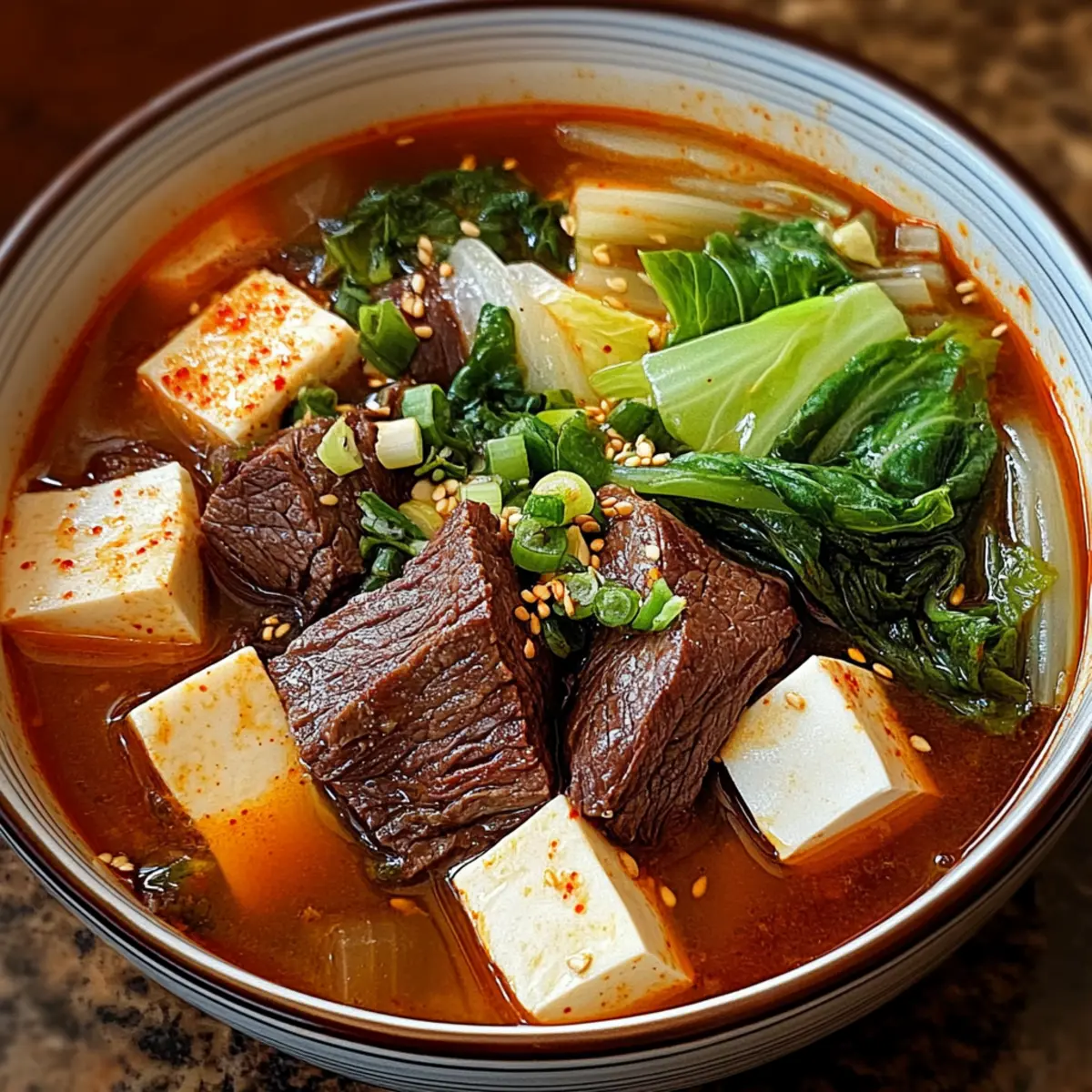
Why is Korean Winter Soup a Must-Try?
Comforting Warmth: This soup is a heartfelt hug for chilly days, with tender beef brisket and spicy broth that will wrap you in cozy flavors.
Incredibly Simple: Whip it up in under an hour, making it a perfect weeknight meal that doesn’t skimp on comfort.
Flavor Explosion: The blend of gochujang and gochugaru provides a symphony of sweet and spicy notes that will tantalize your taste buds.
Versatile Ingredients: Feel free to mix in extra veggies or even noodles; this recipe allows for creativity just like in my favorite Thai Potsticker Soup.
Crowd-Pleasing Dish: Serve it at family gatherings or cozy dinners, and watch it disappear quickly—everyone will be reaching for seconds!
Korean Winter Soup Ingredients
• Dive into the heart of this cozy dish with these essential components!
For the Soup Base
- Beef Brisket – Provides a robust, meaty essence; for a change, you can use chuck roast or short ribs.
- Water – The main component for a flavorful soup base.
- Soy Sauce – Adds umami depth, balancing sweetness and spiciness in the broth.
- Gochujang (Korean red pepper paste) – Offers a spicy-sweet kick; consider miso mixed with chili powder as a substitution but note it will change the flavor.
- Gochugaru (Korean red pepper powder) – Delivers smoky, slightly fruity heat; crushed red pepper flakes can replace it in a pinch.
For the Vegetables
- Garlic (minced) – Enhances the savoriness with its aromatic flavor.
- Onion (chopped) – Sweetens the broth as it caramelizes, adding depth.
- Napa Cabbage (sliced) – Provides texture and a refreshing taste.
- Firm Tofu (cubed) – Offers a silky, protein-rich element that absorbs the spices beautifully.
- Daikon Radish (sliced) – Adds mild sweetness and soaks up the wonderful soup flavors.
For the Finishing Touches
- Sesame Oil – Enhances the nuttiness when sautéing green onions for the final touch.
- Green Onions (sliced) – A refreshing garnish that brings color and brightness to the soup.
- Salt and Pepper – Essential for balancing and enhancing all the wonderful flavors.
- Cooked White Rice – Serves on the side to soak up the delicious broth and complete the meal.
Enjoy crafting this remarkable Korean Winter Soup that captures the essence of comfort in a bowl!
Step‑by‑Step Instructions for Korean Winter Soup
Step 1: Prepare the Broth
In a large pot, combine the beef brisket with approximately 8 cups of water. Bring the mixture to a rolling boil over medium-high heat, then reduce to a gentle simmer. Cook for about 30 minutes, allowing the beef to become tender and the broth to develop its rich flavor. You’ll know it’s ready when the beef is fork-tender and the broth is fragrant.
Step 2: Skim the Impurities
Once the beef is cooked, use a slotted spoon to carefully skim any foam or impurities that have risen to the surface of the broth. This step helps maintain a clear soup and enhances the overall visual appeal of your Korean Winter Soup. Take your time with this process, ensuring a clean, flavorful base for your comforting dish.
Step 3: Add the Flavorings
Stir in 1/4 cup of soy sauce, 2 tablespoons of gochujang, 1 tablespoon of gochugaru, and the minced garlic. Mix everything thoroughly until well combined, making sure the paste dissolves completely in the broth. The fragrant aroma of these seasonings will fill your kitchen, lifting your spirits as they meld into the rich soup base.
Step 4: Incorporate the Vegetables
Next, add the chopped onions, sliced napa cabbage, cubed tofu, and sliced daikon radish into the pot. Increase the heat to medium and allow the soup to simmer for an additional 20 minutes. This will soften the vegetables and allow them to absorb the delicious flavors, creating a hearty and satisfying Korean Winter Soup.
Step 5: Sauté the Green Onions
In a small skillet, heat 1 tablespoon of sesame oil over medium heat. Add the sliced green onions and sauté them until they become fragrant and slightly softened, about 2-3 minutes. This quick step enhances their flavor, which will bring a delightful brightness when mixed into the rich soup later.
Step 6: Final Seasoning
After the vegetables have simmered and softened, add the sautéed green onions into the pot, incorporating them into the soup. Taste and adjust the seasoning with salt and pepper according to your preference. This final tweak ensures each spoonful of Korean Winter Soup is bursting with warmth and flavor, just as you desire it.
Step 7: Serve and Enjoy
Ladle the hearty Korean Winter Soup into bowls and serve it hot. Pair with freshly steamed white rice on the side to soak up the delicious broth. This perfect combination enhances the comfort of the soup and makes for a delightful meal, bringing warmth and nourishment to your winter evenings.
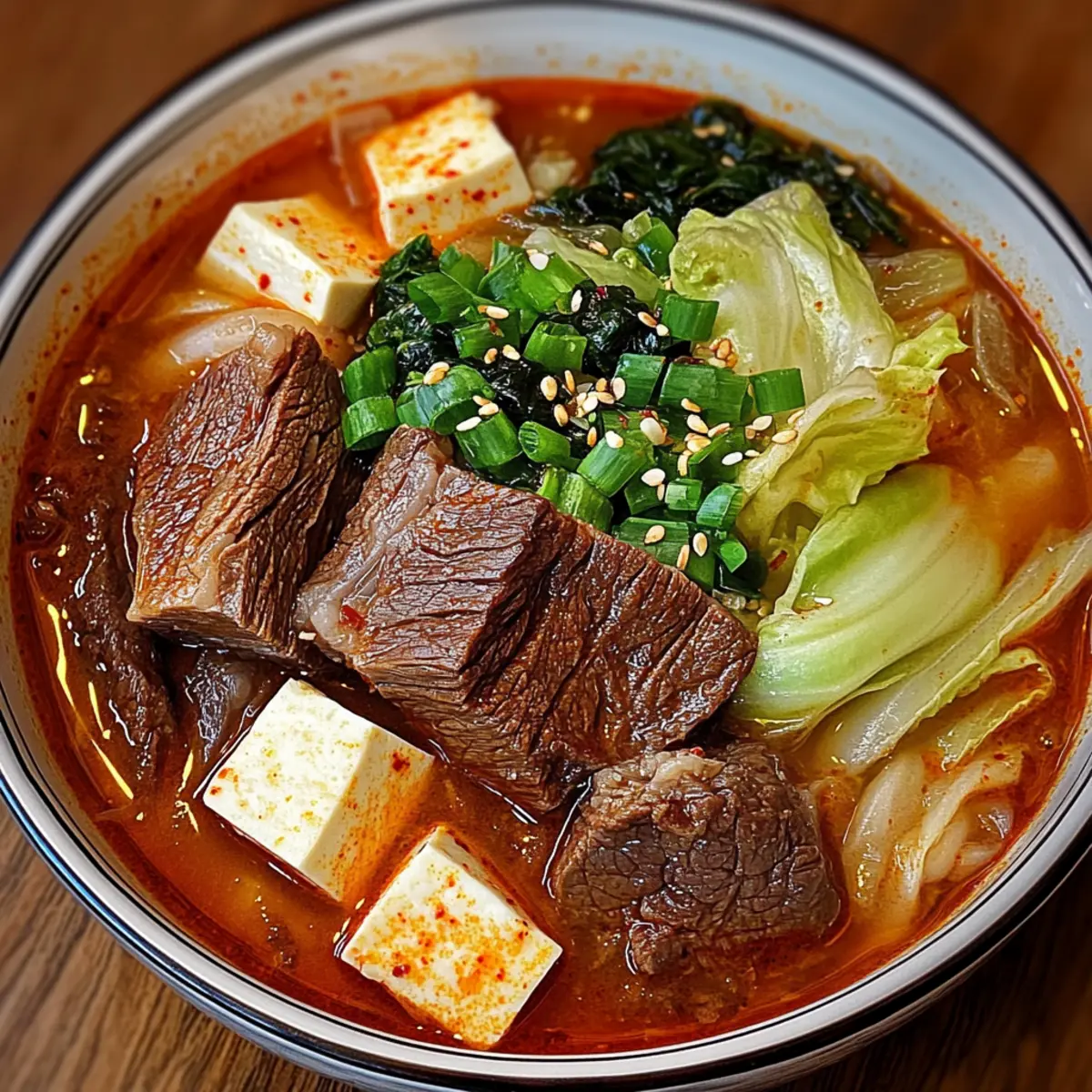
Expert Tips for Korean Winter Soup
- Slow Simmer: Allow the beef brisket to simmer gently for the best tenderness; a vigorous boil can toughen the meat.
- Skim Impurities: Regularly skim the foam from the surface for a clear, beautiful broth, avoiding any cloudiness that can detract from the presentation of this Korean Winter Soup.
- Taste and Adjust: Don’t forget to taste your soup before serving! Adjust seasoning with salt and pepper to enhance the flavors beautifully.
- Customize Spice: Feel free to tweak the amount of gochujang and gochugaru to suit your family’s preferred spice level; start small and add more as needed.
- Extra Veggies: For a nutritious boost, consider adding extra vegetables like mushrooms or carrots for additional texture and flavor.
Korean Winter Soup Variations & Substitutions
Feel free to make this Korean Winter Soup your own with these enjoyable twists and adjustments that keep the warmth flowing!
- Dairy-Free: Swap tofu for seitan or leave it out entirely for a classic beef-focused soup.
- Vegetable Boost: Toss in some mushrooms, zucchini, or carrots for added texture and nutrition.
- Extra Heat: Increase the gochujang and gochugaru for a spicier kick that warms you from the inside.
- Savory Depth: Consider adding a splash of fish sauce to enhance the umami flavor without overpowering the dish.
- Whole Grains: Instead of typical white rice, try serving with brown rice or quinoa for a nutty twist while keeping it hearty.
- Noodle Addition: Drop in some ramen or udon noodles during the last few minutes of cooking for a comforting noodle soup style.
- Leafy Greens: Stir in fresh spinach or bok choy in the last moments of cooking for a burst of color and nutrients.
- Asian Fusion: Try using lemongrass or ginger for a refreshing take; it’ll beautifully elevate your bowl of soul-soothing goodness.
Creating your own unique version of this Korean Winter Soup can lead to delightful surprises. For another comforting recipe, check out my flavorful Thai Potsticker Soup for more inspiration!
Storage Tips for Korean Winter Soup
Fridge: Store the soup in an airtight container for up to 3 days. Allow it to cool before refrigerating to maintain freshness.
Freezer: Freeze the Korean Winter Soup in freezer-safe containers for up to 3 months. Leave some space at the top since the soup will expand when frozen.
Reheating: To reheat, thaw in the fridge overnight if frozen. Gently warm on the stove over medium heat, stirring occasionally until heated through.
Garnish: Add fresh green onions just before serving to enhance flavor and presentation after reheating.
Make Ahead Options
Preparing Korean Winter Soup in advance is a fantastic way to save time for busy weeknights! You can chop the vegetables (like napa cabbage and daikon radish) and marinate the beef brisket in the spices up to 24 hours ahead of time, just refrigerating them in an airtight container. Additionally, you can cook the soup base (steps 1-3) and store it in the fridge for up to 3 days. When you’re ready to enjoy your meal, simply reheat the soup on the stove, add the sautéed green onions, and finish with a taste of salt and pepper for that just-made quality. This way, you’ll have warm, comforting Korean Winter Soup with minimal effort when you need it most!
What to Serve with Korean Winter Soup
Nothing complements the comforting warmth of this hearty soup like a few delightful side dishes and treats that round out a cozy meal.
- Steamed White Rice: Offers a perfect base that soaks up the rich broth, enhancing your eating experience.
- Crunchy Kimchi: Adds a zesty kick and balances the heat of the soup, making each bite exciting and refreshing.
- Savory Scallion Pancakes: These crispy treats bring a delightful crunch, complementing the soup’s soft textures.
- Garlic Soy Dipping Sauce: Perfect for drizzling over vegetables or dumplings, it enhances the meal with an umami burst.
- Sweet Potato Noodles: These chewy noodles provide a fantastic texture contrast and can soak up the delicious broth.
- Spicy Pickled Radish: Adds a tangy crunch that cuts through the richness, brightening each spoonful of soup.
- Cold Tofu Salad: A light, chilled dish that provides a refreshing contrast and a dressing that echoes the flavors of the soup.
- Crispy Fried Dumplings: Perfect for dipping in the soup, these add a satisfying crunch that balances the dish’s warmth.
- Herbal Tea: A soothing drink to sip alongside the meal, helping to cleanse the palate and enhance the comforting atmosphere.
- Sesame Seed Cookies: End the meal with a sweet touch; these cookies provide a nutty finish that lingers pleasantly.
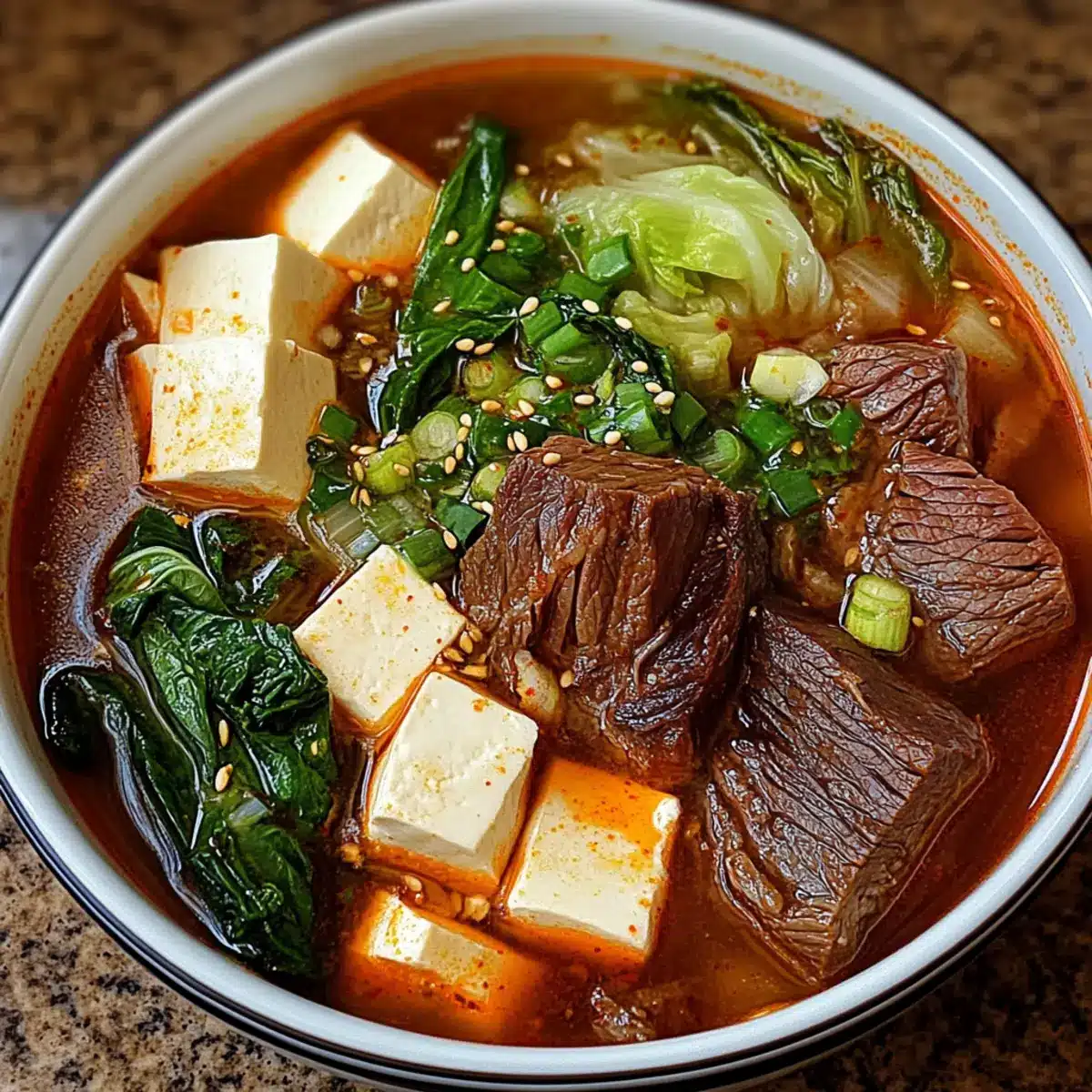
Korean Winter Soup Recipe FAQs
What kind of beef brisket is best for this soup?
Absolutely! For the best results, choose a well-marbled beef brisket as it provides a rich flavor and tenderness. You can also use chuck roast or short ribs if you’re looking for a slightly different texture, but brisket is traditional and gives the soup a robust essence.
How long can I store Korean Winter Soup in the fridge?
The soup can be safely stored in the refrigerator for up to 3 days. Be sure to transfer it to an airtight container once it cools down; this helps to lock in freshness and flavor!
Can I freeze Korean Winter Soup?
Yes, you can freeze the soup to enjoy later! Transfer it to freezer-safe containers, leaving some space at the top for expansion. It will keep well for up to 3 months. When you’re ready to enjoy it again, thaw it overnight in the refrigerator before reheating on the stove.
What should I do if the broth tastes too salty?
Very! If you find that your broth is a bit too salty, try adding additional water or low-sodium broth to dilute the saltiness. You can also add more vegetables like sliced potatoes or grains that will absorb some of the flavor, balancing out the saltiness over time.
Is this soup suitable for those with gluten allergies?
Absolutely! To make the Korean Winter Soup gluten-free, substitute the soy sauce with gluten-free tamari. This swap retains the umami depth without compromising on flavor, making it suitable for anyone with gluten sensitivities.
How can I customize the spice level for my family?
The more the merrier! Adjusting the spice level is super easy. Start with the suggested amounts of gochujang and gochugaru, then taste as you go. If you prefer it milder, reduce the amounts, or conversely, if you enjoy a kick, you can add more gradually until you reach your desired heat!
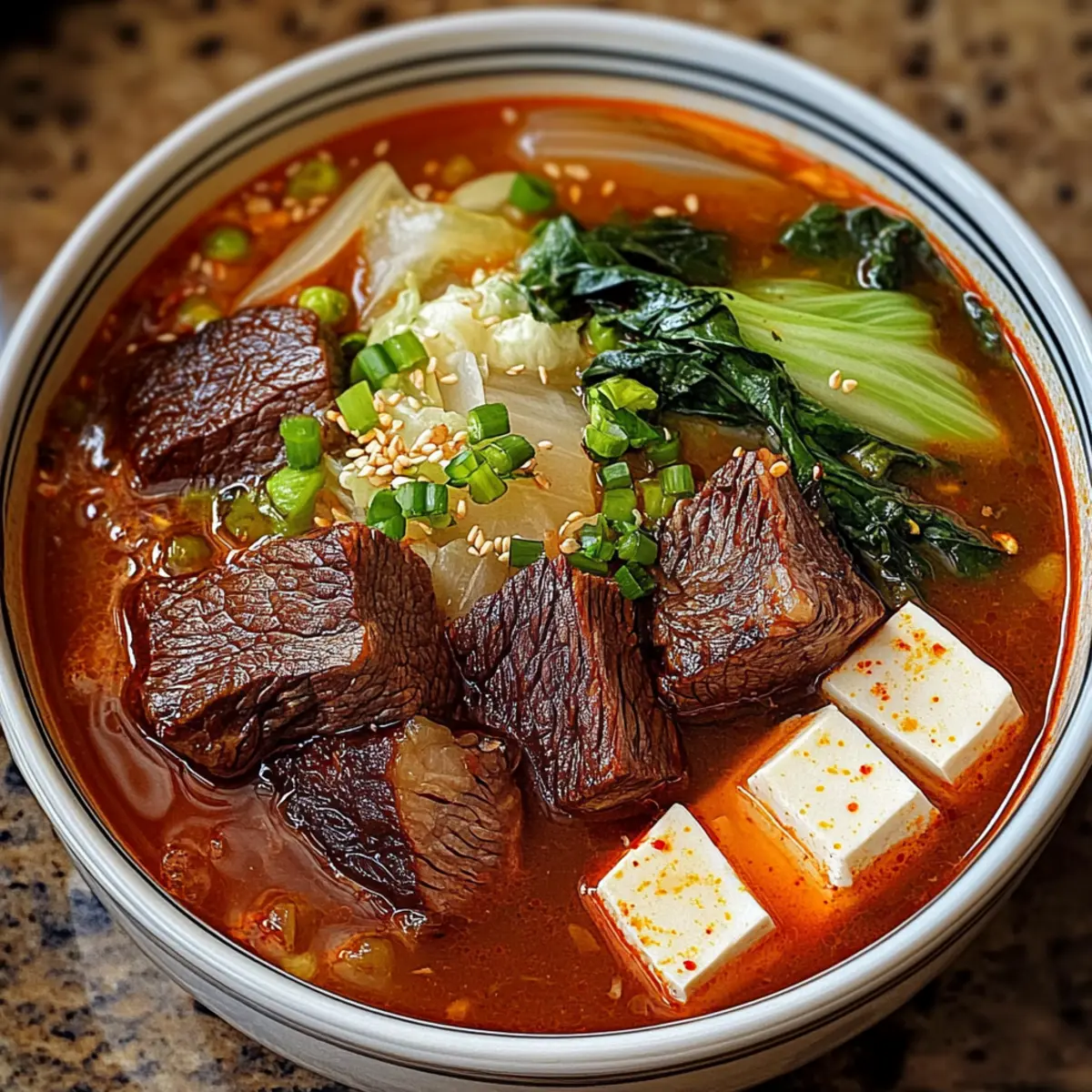
Korean Winter Soup: Cozy Up with Hearty Beef Brisket Delight
Ingredients
Equipment
Method
- In a large pot, combine the beef brisket with approximately 8 cups of water. Bring to a rolling boil, then reduce to a gentle simmer for about 30 minutes.
- Carefully skim any foam or impurities that have risen to the surface of the broth using a slotted spoon.
- Stir in 1/4 cup of soy sauce, 2 tablespoons of gochujang, 1 tablespoon of gochugaru, and the minced garlic. Mix thoroughly.
- Add the chopped onions, sliced napa cabbage, cubed tofu, and sliced daikon radish, then simmer for an additional 20 minutes.
- Heat 1 tablespoon of sesame oil in a skillet over medium heat. Sauté the sliced green onions until fragrant, about 2-3 minutes.
- Add the sautéed green onions into the soup, taste, and adjust seasoning with salt and pepper.
- Ladle the soup into bowls and serve hot with cooked white rice on the side.
Leave a Reply